Son of Indravarman and Indradeví, who himself came from the royal families of Vyádhapura, Sambhupura in Kratie province and Aninditapura in sputern water Tchen-la.

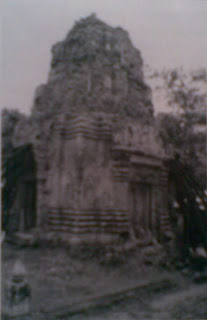
In 893, he erected Lolei temple in the middle of the Indratatáka Baray. The brick temple comprised four sanctuaries designed to house statues of Siva and his wife, which represent his parents and grandparents. He commissioned the construction of several hermitages throughout the province.

The inscription on the Sdok Kak Thom stele names him as the founder of the city of Yasodharapura. He built his temple at the top of Phnom Bakheng to house the Yasldharesvara Siva linga. In addition, he crowned Phnom Bok and Phnom Krom with temples dedicated to the major Trimúrti gods, Brahma, Visnu and Siva, and completed the eastern reservoir, which is called Yasldharatatáka and spreads over an area of 7km in length by 1.8km in width. The reservoir is now dry.
Lastly, he began the construction of temples dedicated to the supreme god, Siva: Sikharesvara at Preah Vihear temple and Bhadresvara at Phnom Sandak temple (Sivapura).
Yasovarman was given the posthumous name Preah Sivaloka after his death.


In 893, he erected Lolei temple in the middle of the Indratatáka Baray. The brick temple comprised four sanctuaries designed to house statues of Siva and his wife, which represent his parents and grandparents. He commissioned the construction of several hermitages throughout the province.


The inscription on the Sdok Kak Thom stele names him as the founder of the city of Yasodharapura. He built his temple at the top of Phnom Bakheng to house the Yasldharesvara Siva linga. In addition, he crowned Phnom Bok and Phnom Krom with temples dedicated to the major Trimúrti gods, Brahma, Visnu and Siva, and completed the eastern reservoir, which is called Yasldharatatáka and spreads over an area of 7km in length by 1.8km in width. The reservoir is now dry.
Lastly, he began the construction of temples dedicated to the supreme god, Siva: Sikharesvara at Preah Vihear temple and Bhadresvara at Phnom Sandak temple (Sivapura).
Yasovarman was given the posthumous name Preah Sivaloka after his death.

